The Seongsu Girl Doesn't Live Here Anymore
Or,how a neighborhood's vibe and spatial grammar quietly succeeded by spreading out past just Seongsu.
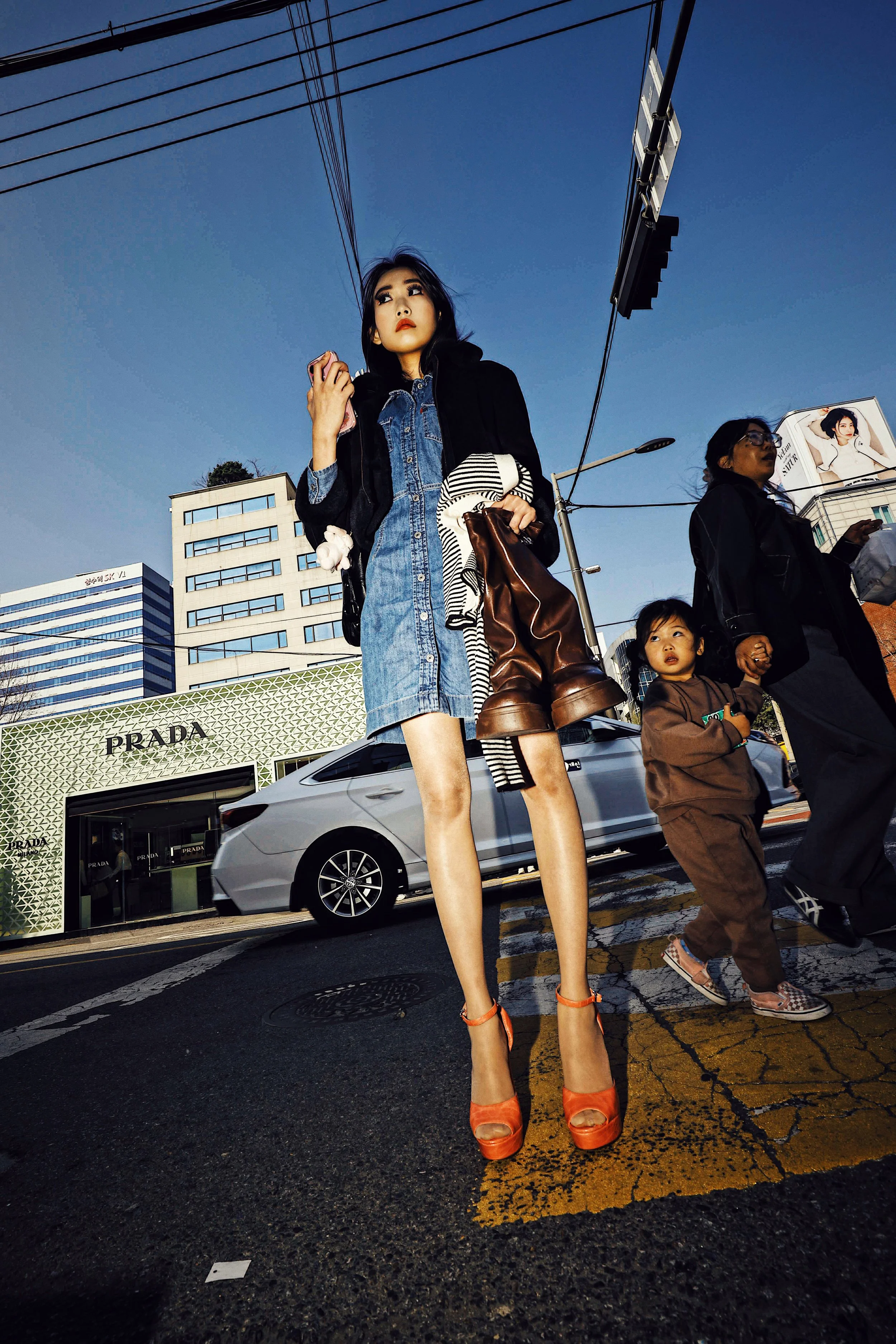
Same denim. Same orange platforms. Same energy, whether it's an übertrendy, minimalist cafe’s rooftop or the Prada crosswalk. Model @solsolyou didn't dress for the space — the space dressed around her.
Two years ago I started calling her the “Seongsu girl,” not because she was one specific person, but because she was a type the neighborhood kept producing. Trendy denim “one-piece” dress, coral pink/orange platform heels, the Korean agassi’s signature iced americano presented and cradled in a whiskey glass in the rooftop of a hip café called Breville, then the same outfit twenty minutes later at a crosswalk in front of Prada, a kid in the background staring like she'd never seen anything like her before. She wasn't dressed for either location. Both locations had been built, unknowingly, for her.
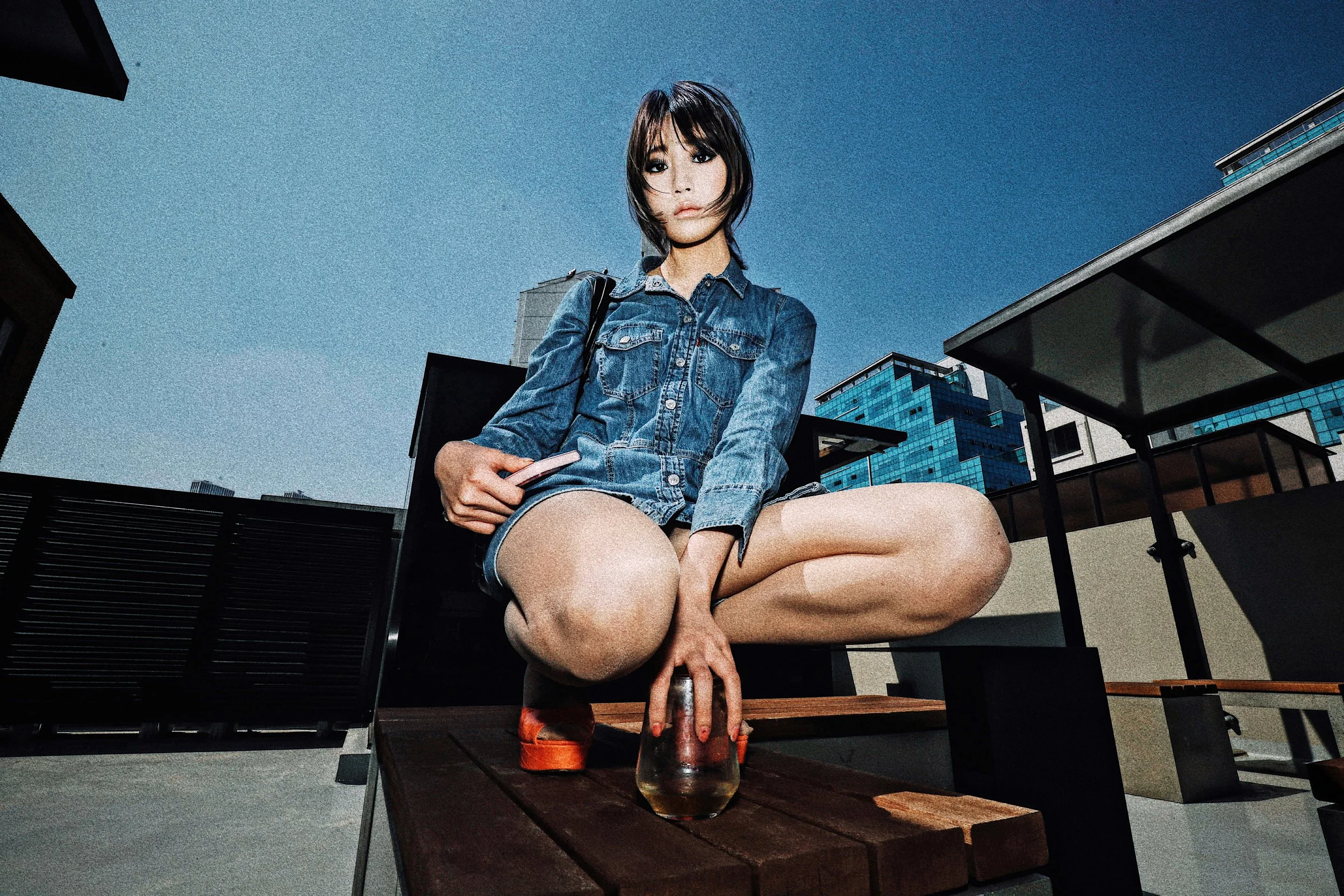
That was Seongsu doing what it did best: turning a street into a stage and handing the lead role to whoever showed up looking right. It's why the neighborhood became shorthand for Korean cool in the first place. It's also, as of this year, a version of Seongsu that's already leaving, spreading out.
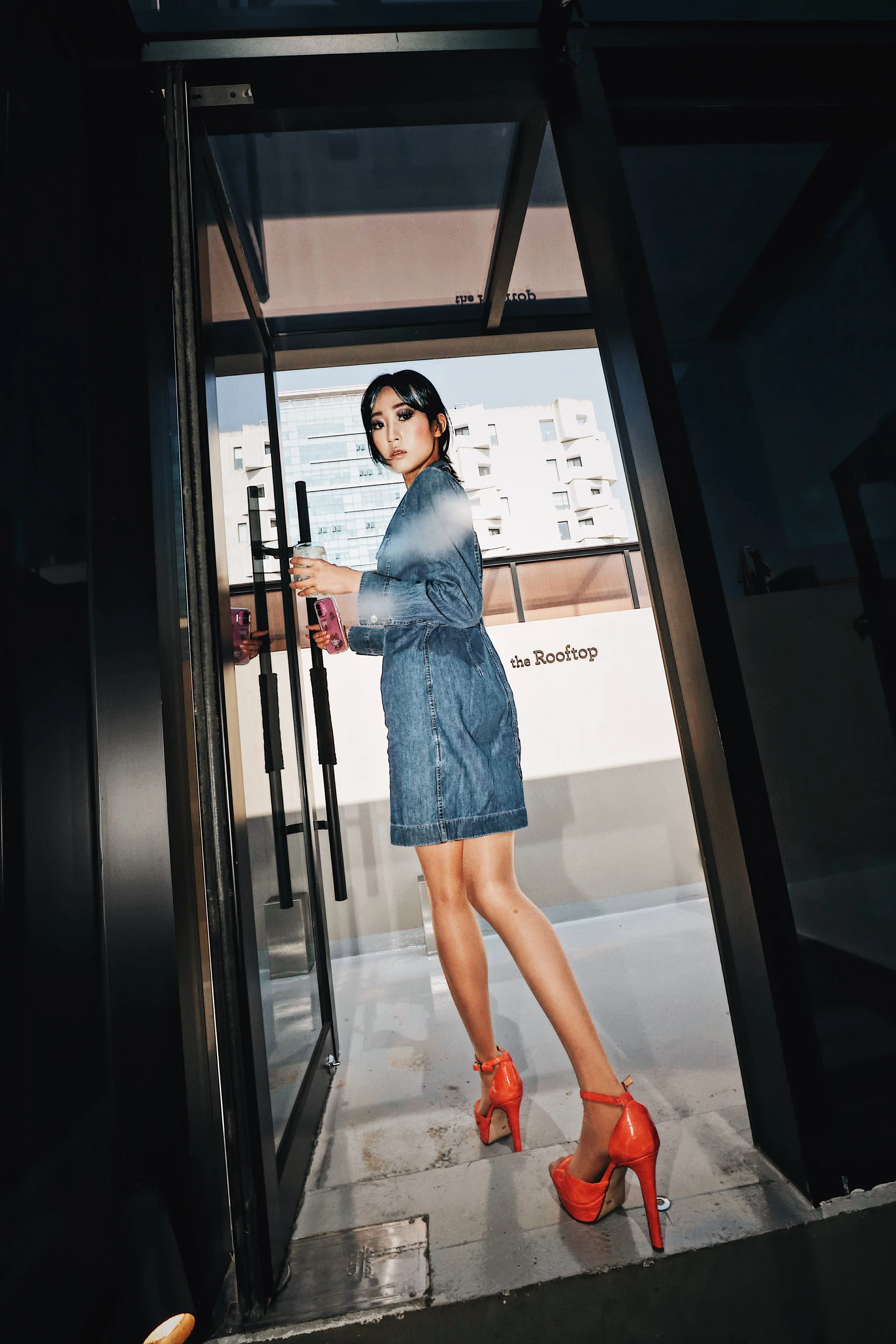
Model @solsolyou heading out from the minimalist interior to the minimalist exterior interior of The Rooftop of The Breville cafe for an iced Americano in a whiskey glass.
The churn packed up and moved to Yongsan
Here's the part that doesn't fit the Seongsu is either “still hot” or “already over" barratives out there amongst Seoulites: it's both, just not about the same thing. The pop-up churn — the 40-brands-a-week rotation that made the neighborhood feel alive — is measurably thinning out. Seongsu's share of Seoul's pop-up activity dropped from roughly 35% to 26% in a single year. Yeonmujang-gil, the one street that basically was the brand, is down 16%. Meanwhile Yongsan is up 150%.
The energy didn't die. It got priced out and went looking for somewhere cheaper to be interesting, which is exactly what a discovery economy does once a neighborhood's rawness has been fully strip-mined for content. The Seongsu girl, if she's smart, is already performing and drinking more iced Americanos, and shooting in Yongsan.
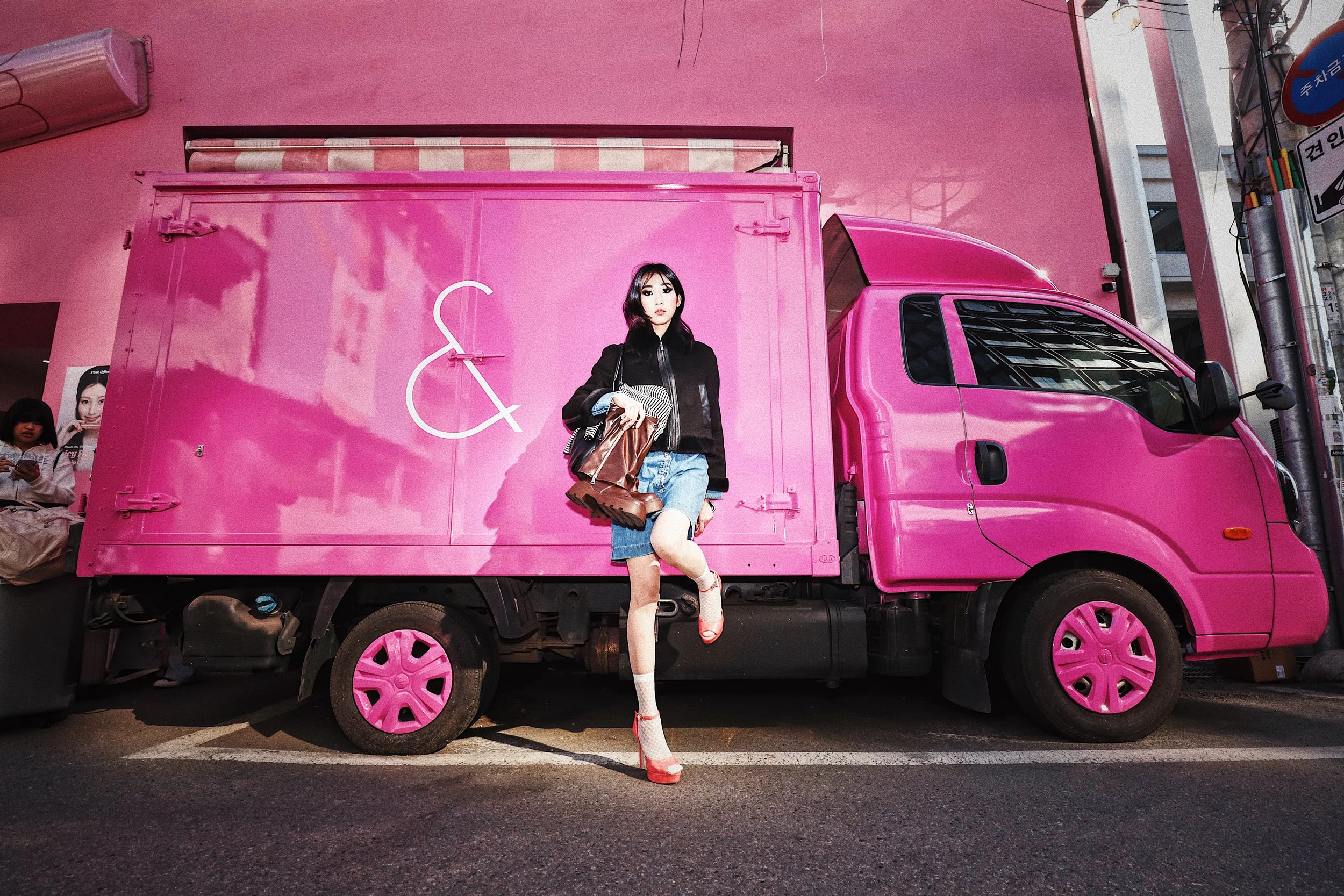
The pink popup truck is still parked where it always was. What's changed is who's still coming to shoot in front of it.
Meanwhile, somebody's buying the real estate. CJ Olive Young spent a billion won trying to put its name on Seongsu Station in 2024, got dragged online for it, and surrendered the rights eight months later, eating a ₩180 million penalty. You'd think that's the end of the story — a company learns it can't just buy a neighborhood's identity and walks away chastened.
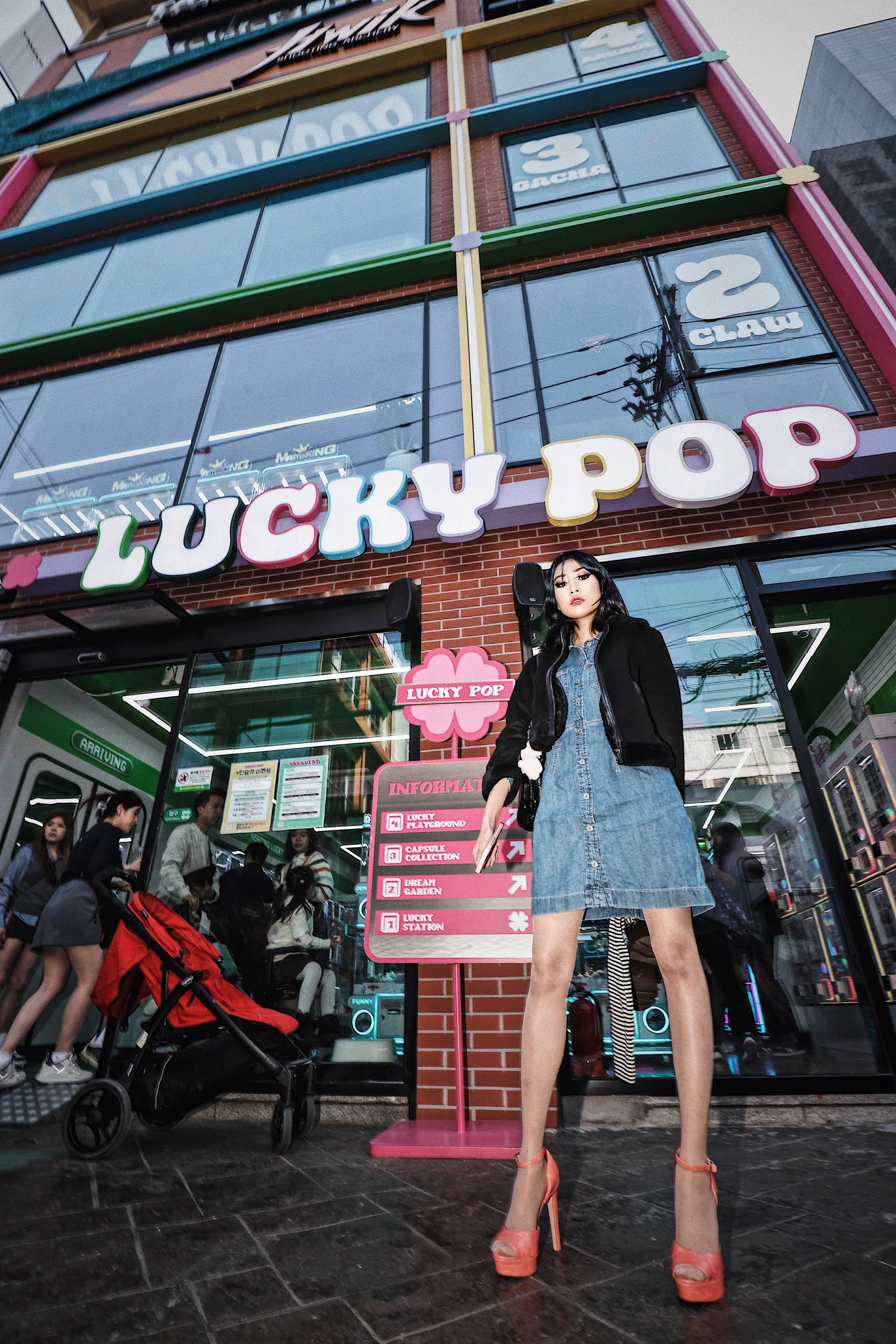
Model @solsolyou stakes out space outside a busy gacha shop that’s standing-room-only in the middle of the main popup strip in Seongsu’s Yeonmujang-gil.
Instead, eighteen months later, Olive Young bought a building in Seongsu outright for ₩54 billion. It couldn't purchase the name. It bought the block instead. Musinsa, which did win the naming rights, opened a five-floor, 2,000-pyeong flagship this spring that its own marketing calls a "복합 놀이터" — a complex playground — and cleared ₩900 million in sales in three days. Nobody at these companies is pretending the store is just a store anymore. They're building the stage the Seongsu girl used to get for free.
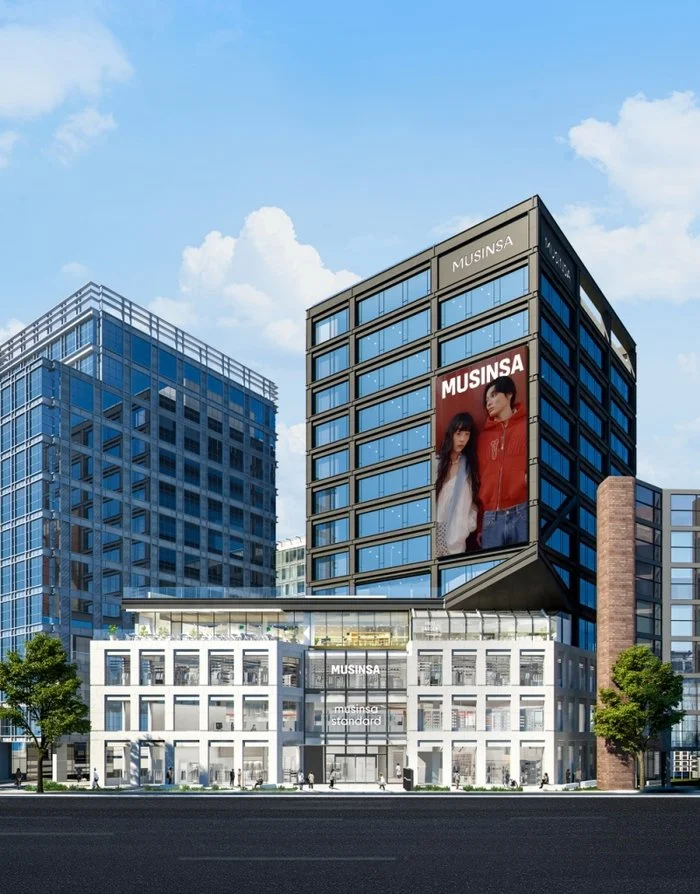
Five floors, one word for what it's actually selling: 놀이터. A playground, permanently installed where the pop-ups used to rotate weekly.Source: Maeil Business.
"Fame in a Korean neighborhood is a lagging indicator. By the time you've heard of it, the cheap, alive version of the opportunity is already gone."
She's not gone. She just moved on.
The mistake is reading Seongsu's story as decline. It isn't. It's graduation. The neighborhood didn't get less cool — it got expensive enough that the people who made it cool can no longer afford to be the ones discovering it. What's left behind is more valuable, more permanent, and considerably less alive: buildings owned outright by companies with nine-figure balance sheets, built to look exactly like the thing that used to happen there for free.
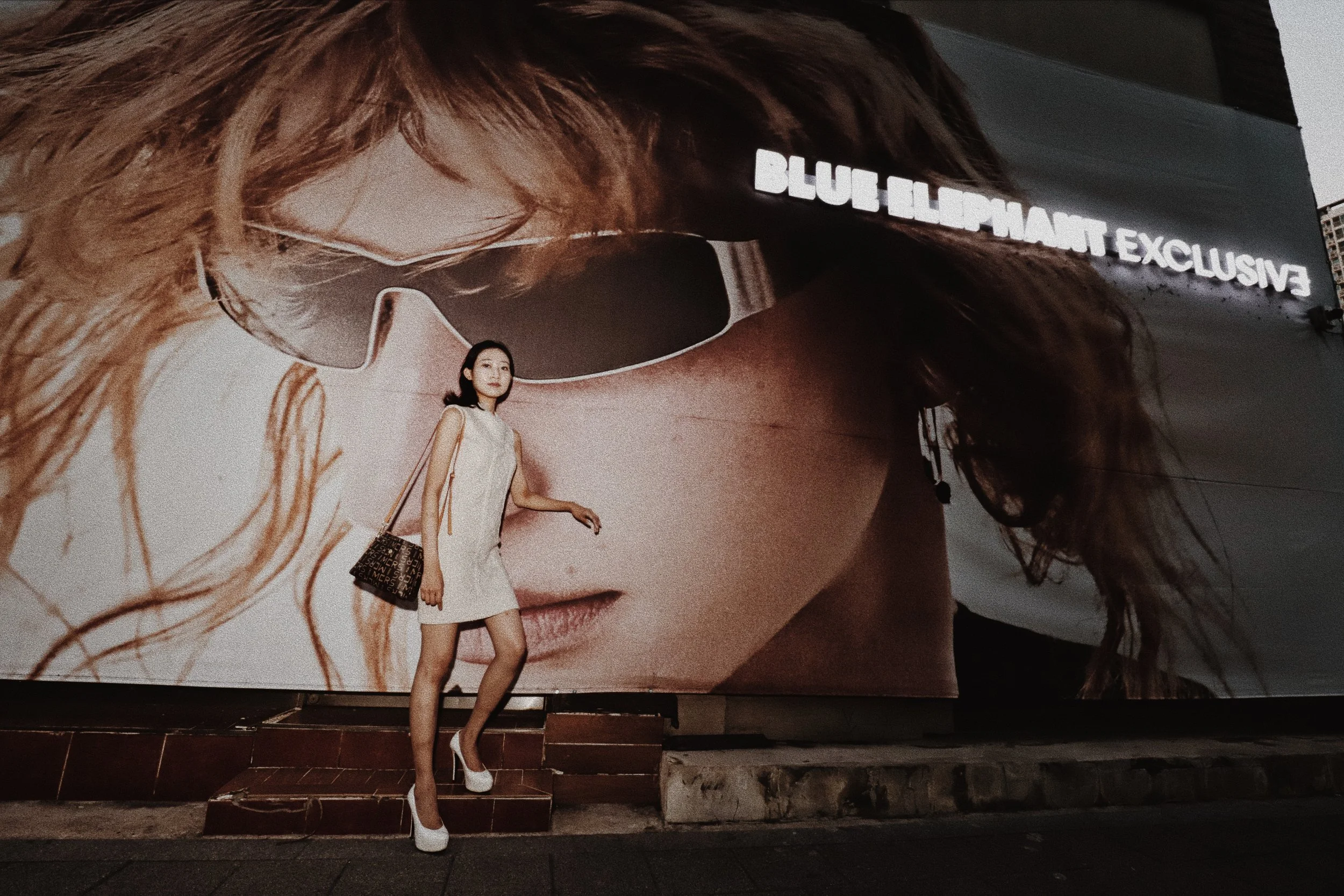
Model @solsolyou branches out to explore Yongsan’s Yongnidan-gil, which is one of the most talked-about high rates of pop-up formation outside of Seongsu right now. The spatial logic and vibe of the popup is no longer linked, in the minds of many, only to Seongsu.
The Seongsu girl isn't a casualty of that. She's just an early indicator, same as always — she'll be the one standing in front of whatever storefront in Yongsan or Mapo becomes the next argument, wearing something nobody's brand team thought of first. Someone should be there with a camera when she is.
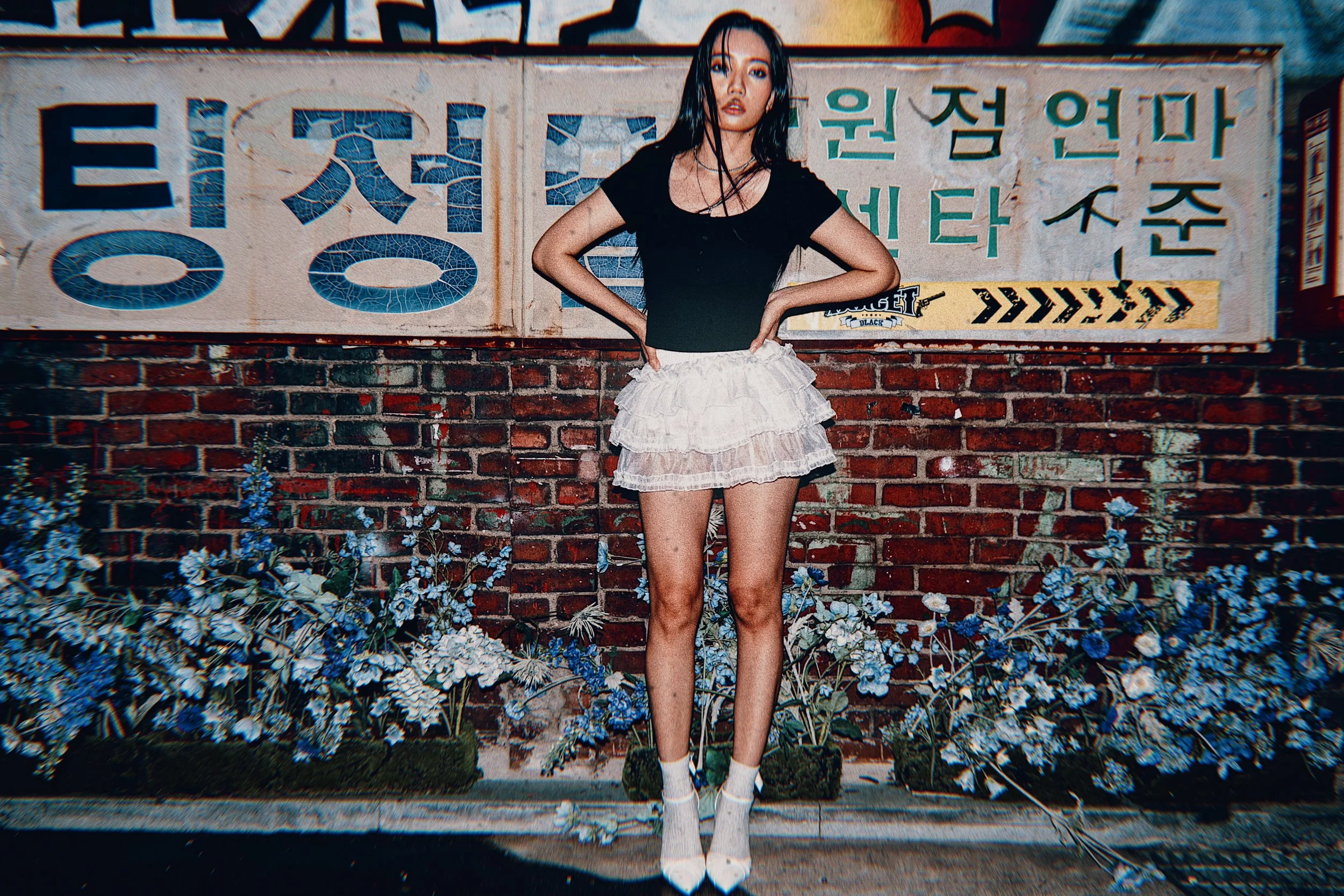
Perhaps she went to Mullae? A place that’s been glowing up hotter for years now, and is sometimes talked about as the “next Seongsu”, but Burmese model @min_myo14 knows better. Mullae keeps the grit and stays Mullae, stays Korea.
Want the full data? The complete breakdown of how “Fame Is a Lagging Indicator”: pop-up diffusion numbers, the real estate ownership shift, the -ridan-gil naming rule — it all runs in the Korea Monthly Intelligence Brief (KMIB), Issue 03.
The complete breakdown — pop-up diffusion numbers, the real estate ownership shift, the –ridan-gil naming rule — runs in Korea Monthly Intelligence Brief, Issue 03.
Read Issue 03